Eagles Rookie Trade Attempt: Strategy, Impact, and What It Means for the Future

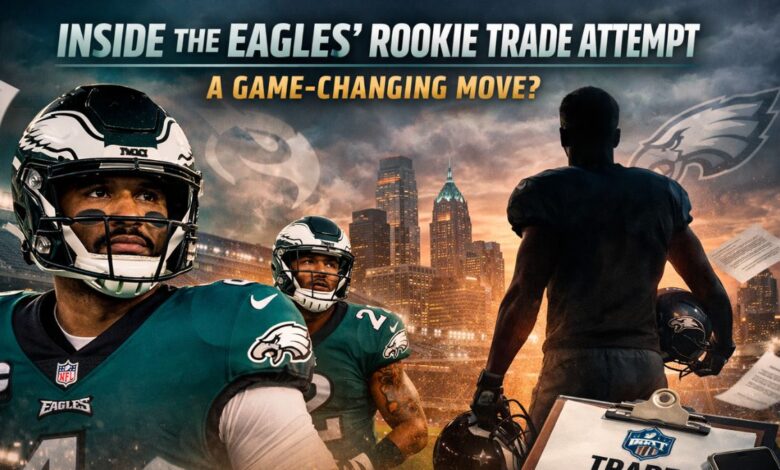
The phrase eagles rookie trade attempt has sparked significant interest among fans, analysts, and front-office watchers. Trade maneuvers involving rookies are always intriguing because they reveal how a franchise balances immediate needs with long-term development. For a team with a competitive mindset, even the possibility of moving a young player can signal deeper strategic intentions.
In this comprehensive guide, we’ll explore the context behind an eagles rookie trade attempt, why teams consider such moves, the potential benefits and risks, and what it could mean for roster construction moving forward.
Understanding the Context Behind an Eagles Rookie Trade Attempt
When discussions arise about a rookie being part of trade considerations, it usually reflects a broader evaluation process. Teams continuously assess performance, scheme fit, and depth chart dynamics.
For the Philadelphia Eagles, a franchise known for aggressive roster management, trade speculation often ties into their philosophy of staying competitive while maintaining flexibility.
A rookie trade attempt doesn’t necessarily mean dissatisfaction. In many cases, it indicates that the front office sees an opportunity to improve another position group or acquire future draft capital.
Why Teams Consider Trading Rookies
1. Scheme Fit Adjustments
Sometimes a player drafted under one strategic vision doesn’t perfectly align with evolving coaching plans. Rather than letting development stall, teams explore trade options that benefit both sides.
2. Depth at the Position
If a roster has multiple young prospects competing for limited snaps, moving one can help redistribute resources where depth is thinner.
3. Capitalizing on Market Value
A rookie with strong preseason flashes or college pedigree may hold high trade value. Teams occasionally leverage that value to address immediate roster gaps.
4. Salary Cap Planning
Rookie contracts are relatively affordable, but trades can still play a role in broader financial strategy, especially when combined with other moves.
The Strategic Philosophy Behind Philadelphia’s Roster Moves
Over the years, the Eagles have built a reputation for proactive decision-making. Their approach often includes:
-
Prioritizing positional strength in the trenches
-
Maintaining a steady pipeline of young talent
-
Using trades to stay competitive year-to-year
An eagles rookie trade attempt fits neatly into this philosophy. It reflects a willingness to adapt quickly rather than waiting multiple seasons to see if a developmental player reaches potential.
Potential Benefits of Trading a Rookie
Immediate Roster Improvement
If a trade brings in a veteran contributor or fills a critical need, the team can see short-term gains.
Better Opportunity for the Player
A rookie buried on the depth chart might flourish with more playing time elsewhere, creating a win-win scenario.
Future Draft Assets
Acquiring picks can strengthen long-term roster building, especially for teams that excel at drafting.
Locker Room Clarity
Reducing positional logjams can help define roles more clearly, which often improves team chemistry.
Risks Associated With Rookie Trade Attempts
Losing Future Potential
Rookies are inherently unpredictable. Trading one too early can lead to regret if the player develops into a star elsewhere.
Fan Perception
Supporters often form quick attachments to young prospects, and a trade can generate criticism if not clearly beneficial.
Short-Term Focus Over Long-Term Growth
Prioritizing immediate gains may weaken the developmental pipeline if not balanced carefully.
Evaluating the Decision-Making Process
Front offices rely on a combination of analytics, scouting reports, and coaching input. Key evaluation factors typically include:
-
Practice performance and learning curve
-
Physical durability and injury history
-
Positional value within the team’s scheme
-
Long-term roster projections
An eagles rookie trade attempt would likely emerge only after extensive internal discussion and scenario modeling.
How Coaching Philosophy Influences Trade Decisions
Coaches play a critical role in determining whether a rookie remains part of future plans. If a coaching staff believes another player fits their system more effectively, they may advocate for exploring trade options.
Conversely, strong development potential can convince leadership to keep a player despite short-term roster pressure. This balance between coaching vision and front-office strategy often shapes the final decision.
Fan and Media Reactions
Whenever news surfaces about a possible trade involving a rookie, reaction tends to be immediate and passionate. Analysts debate the long-term implications, while fans weigh the emotional aspect of losing a young prospect.
In markets with high expectations, every roster move is scrutinized for its impact on championship aspirations. That scrutiny intensifies when the player involved has untapped potential.
Historical Perspective on Rookie Trades
Across the league, rookie trades have produced mixed outcomes. Some players thrive after a change of scenery, while others struggle to replicate early promise.
The broader lesson is that player development isn’t linear. Environment, coaching, and opportunity all play crucial roles in shaping a career trajectory.
What an Eagles Rookie Trade Attempt Could Signal
A move involving a rookie often hints at one of several strategic directions:
-
All-in contention mode: prioritizing immediate upgrades
-
Roster recalibration: reshaping depth and positional balance
-
Asset accumulation: building for sustained competitiveness
Understanding which scenario applies helps contextualize the decision beyond the individual player involved.
Long-Term Implications for Team Building
Even if a trade attempt doesn’t materialize, the process itself can influence future strategy. Teams learn more about market demand, player value, and internal depth.
For the Eagles, maintaining flexibility has historically been a cornerstone of success. Exploring trade possibilities—whether completed or not—reinforces that adaptive mindset.
The Player Perspective
From a rookie’s standpoint, trade speculation can be both challenging and motivating. While uncertainty is never easy, it also signals that other teams recognize potential value.
Many players use such moments as motivation to refine skills, deepen playbook knowledge, and demonstrate resilience.
Balancing Development and Competition
One of the most complex aspects of roster management is deciding how long to invest in development before seeking alternatives.
An eagles rookie trade attempt illustrates this tension. Teams must weigh patience against the urgency of competing in a highly competitive environment.
Looking Ahead: Possible Outcomes
The future following a trade attempt typically falls into one of three paths:
-
Trade Completed: The roster shifts and new opportunities emerge.
-
Player Retained: Increased competition often pushes performance higher.
-
Delayed Decision: Teams revisit discussions later in the season or offseason.
Regardless of outcome, the evaluation process itself often strengthens organizational clarity.
FAQs
What is meant by an eagles rookie trade attempt?
It refers to a situation where the team explores the possibility of trading a newly drafted player, usually to improve roster balance or acquire assets.
Does a trade attempt mean the rookie underperformed?
Not necessarily. Many trade discussions are driven by strategic considerations rather than performance issues.
How common are rookie trades in the NFL?
They are less common than veteran trades but occur regularly enough to be considered a normal part of roster management.
What factors determine whether a rookie gets traded?
Performance, positional depth, scheme fit, and market demand are the most influential factors.
Can a trade attempt affect a player’s development?
It can, but many players use the experience as motivation. In some cases, a new environment accelerates growth.
Do fans usually support rookie trades?
Reactions vary widely. Support often depends on the perceived return and the team’s competitive outlook.
Final Thoughts
The topic of an eagles rookie trade attempt highlights the intricate balancing act behind modern roster construction. Every decision reflects a blend of scouting insight, analytical evaluation, and competitive ambition.
Whether a trade ultimately happens or not, the mere consideration reveals how seriously teams approach continuous improvement. For fans and analysts alike, these moments offer a fascinating glimpse into the strategic engine that drives professional football success.