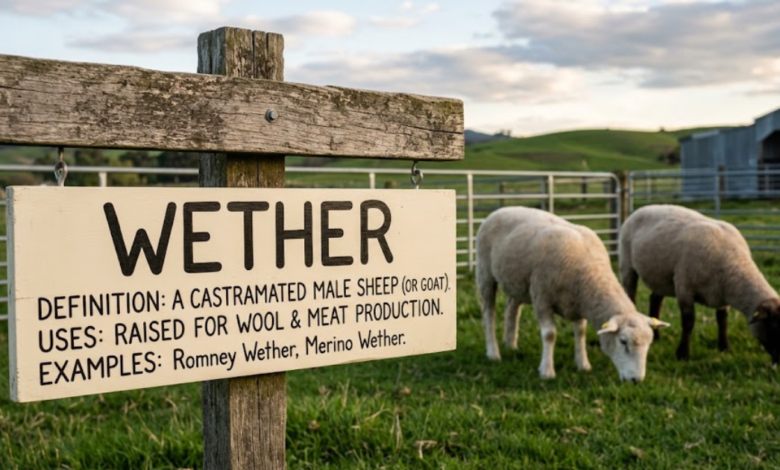
The word wether often makes people stop and check their spelling. It looks almost identical to “weather” and “whether,” and all three words can sound very similar when spoken. However, wether is a legitimate English word with a specific meaning. It is mainly used in agriculture, animal husbandry, livestock shows, and conversations involving sheep or goats. Understanding the definition makes it much easier to distinguish the three commonly confused words.
In simple terms, a wether is a castrated male sheep. The term can also be used for a castrated male goat. Merriam-Webster defines it specifically as a male sheep castrated before sexual maturity and also recognizes its use for a castrated male goat. Agricultural organizations use the same terminology when describing livestock classes and animal records.
What Does Wether Mean?
A wether is a male sheep that has been castrated, usually meaning it is no longer intended for breeding. The same word is commonly applied to castrated male goats in livestock terminology. For comparison, an adult intact male sheep is normally called a ram, while an adult female sheep is called a ewe. Mississippi State University Extension similarly defines a wether as a castrated male sheep or castrated ram.
The word is pronounced approximately “WEH-thur.” That pronunciation helps explain why people frequently confuse it with weather and whether. In everyday writing, you may rarely encounter wether unless you work with farm animals, read livestock information, participate in agricultural programs, or research sheep and goats. Still, it is an established English noun rather than an incorrect spelling of another word.
Quick Definition
Wether: A castrated male sheep; the term is also used for a castrated male goat.
Related livestock terms include:
- Ram: An adult male sheep that has not been castrated
- Ewe: An adult female sheep
- Wether: A castrated male sheep
- Doe: An adult female goat
- Buck: An intact adult male goat
- Kid: A young goat
Wether vs. Weather vs. Whether
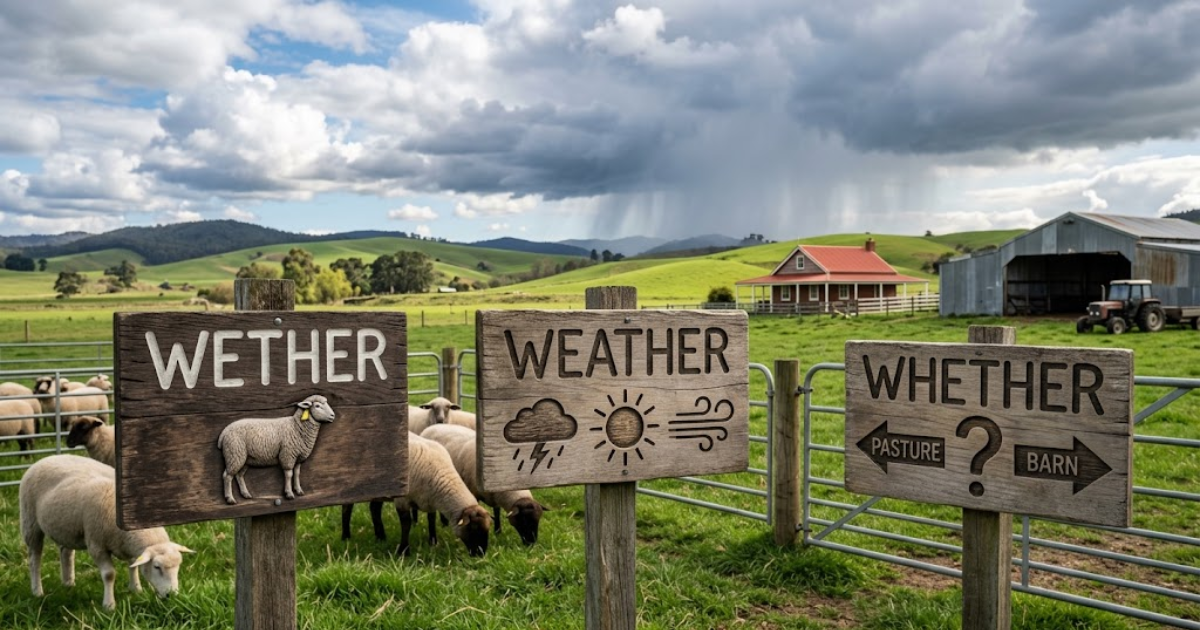
The biggest source of confusion comes from the fact that wether, weather, and whether have similar pronunciations but completely different meanings. Weather describes atmospheric conditions such as temperature, rain, wind, clouds, or sunshine. Whether is a conjunction used when discussing possibilities, alternatives, uncertainty, or choices. Wether, meanwhile, refers to a castrated male sheep or goat.
The easiest way to choose the correct spelling is to think about what the sentence describes. If you are talking about rain or sunshine, use weather. If you are introducing alternatives, use whether. If the sentence is specifically discussing a male sheep or goat that has been castrated, wether is the correct word. This distinction prevents one of the more unusual spelling errors in English.
| Word | Meaning | Example |
|---|---|---|
| Wether | Castrated male sheep or goat | The farmer entered a wether in the livestock show. |
| Weather | Atmospheric conditions | The weather will be warm this afternoon. |
| Whether | Indicates choices or possibilities | I don’t know whether she will attend. |
Consider the sentence: “I don’t know whether the weather will affect the wether.” It sounds repetitive when spoken, but each word performs a completely different job. “Whether” introduces uncertainty, “weather” describes atmospheric conditions, and “wether” identifies the animal.
Why the Term Wether Is Used for Sheep and Goats
In livestock terminology, animals are often identified according to species, sex, age, and reproductive status. That is why farmers and agricultural organizations use specific words such as ram, ewe, doe, buck, and wether instead of simply saying “male sheep” or “male goat.” These terms communicate useful information quickly and allow farmers, judges, veterinarians, students, and livestock buyers to understand which type of animal is being discussed.
The term appears regularly in formal agricultural settings. Pennsylvania State University Extension, for example, uses “wether” when distinguishing the sex of sheep in livestock records, while Mississippi State University describes wethers as castrated males in its goat and sheep programs. This shows that the word remains practical agricultural vocabulary rather than an outdated dictionary term.
Wether Sheep vs. Wether Goat
| Animal | Intact Male | Female | Castrated Male |
| Sheep | Ram | Ewe | Wether |
| Goat | Buck | Doe | Wether |
Because the same term can apply to both species, context is important. Someone discussing a “wether lamb” is referring to a castrated male sheep, while a “wether goat” means a castrated male goat.
How Wether Is Used in Farming and Livestock
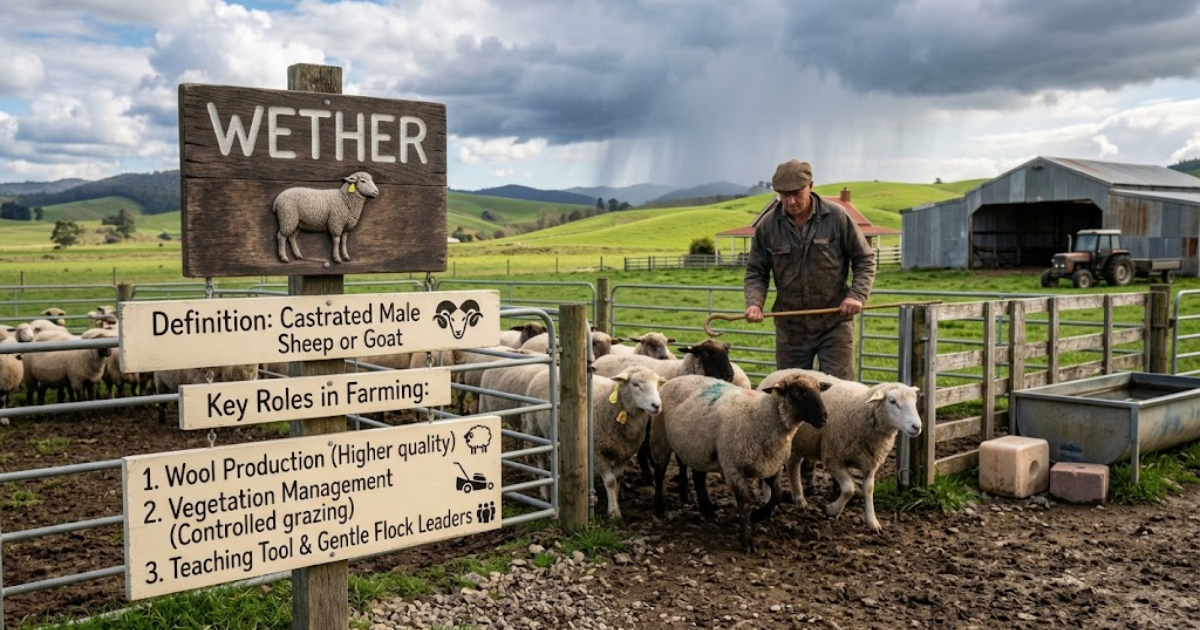
You are most likely to encounter this word when reading livestock records, agricultural publications, animal-sale descriptions, farm advertisements, or rules for youth livestock competitions. Some market livestock programs distinguish animals according to whether they are females or wethers. Utah State University Extension livestock rules, for example, specifically refer to wether goats and require males in certain market classes to be castrated.
The term also appears in educational programs such as 4-H and FFA livestock activities in the United States. Participants may raise, feed, train, and show market lambs or goats under rules that identify eligible animals by sex and reproductive status. Because of this, students involved in livestock projects often become familiar with terms such as wether long before people outside agriculture encounter them.
Common phrases include:
- wether sheep
- wether goat
- market wether
- wether lamb
- show wether
- yearling wether
- wether class
The exact meaning does not fundamentally change in these phrases. The surrounding words simply provide more information about the animal’s species, age, or purpose.
Common Wether Spelling Mistakes
The most common mistake is writing wether when the writer actually means weather. If you are discussing temperature, rain, snow, wind, storms, sunshine, or atmospheric conditions, weather is the correct spelling. For example, “The wether is beautiful today” is incorrect unless you are somehow describing a particular sheep or goat as beautiful. “The weather is beautiful today” is the intended sentence.
Another frequent mistake is substituting wether for whether. Whether is used when introducing alternatives or uncertainty. Merriam-Webster describes whether as a conjunction that can introduce questions about whether something is true or alternatives in which one possibility may occur. Therefore, “I don’t know wether to stay or leave” is incorrect. The correct sentence is “I don’t know whether to stay or leave.”
Easy Way to Remember the Difference
Use this simple three-part memory trick:
- Weather = atmosphere
Think about rain, sunshine, snow, temperature, and wind. - Whether = alternatives
Think about choosing whether to do one thing or another. - Wether = animal
Think about a sheep or goat on a farm.
A useful mental shortcut is: weather outside, whether you decide, wether in the field.
Wether Examples in Sentences
Seeing the word in context makes its meaning much easier to remember. Because it is primarily livestock terminology, natural examples usually involve farms, sheep, goats, markets, exhibitions, or agricultural education. When used correctly, wether functions as a noun. You can therefore place it in a sentence in much the same way you would use words such as ram, ewe, sheep, or goat.
Here are several examples: “The farmer kept the wether with the rest of the flock.” “Her market wether was entered in the county livestock show.” “The students learned how to distinguish a ram from a wether.” “They purchased a wether goat for their livestock project.” In each case, the word identifies a castrated male animal rather than atmospheric conditions or a grammatical expression of uncertainty.
Correct and Incorrect Examples
| Sentence | Correct? | Reason |
| The wether stayed near the other sheep. | Yes | It refers to the animal. |
| The wether will be rainy tomorrow. | No | Use “weather.” |
| I wonder wether he will come. | No | Use “whether.” |
| The wether goat was entered in the show. | Yes | It identifies a castrated male goat. |
| Check the weather before leaving. | Yes | It refers to atmospheric conditions. |
| Decide whether you want to stay. | Yes | It introduces alternatives. |
If you are still unsure, replace the word mentally with its definition. If “castrated male sheep or goat” makes sense, wether is probably correct. If “atmospheric conditions” makes sense, choose weather. If the sentence deals with a choice, question, or alternative, choose whether.
Conclusion
Wether is an uncommon but completely valid English word. It refers primarily to a castrated male sheep and can also describe a castrated male goat. The term remains widely relevant in livestock terminology, agricultural education, farm records, and animal competitions. Understanding that meaning immediately separates it from two much more common words that sound similar.
Remember the difference this way: weather describes atmospheric conditions, whether introduces choices or possibilities, and wether identifies a particular type of sheep or goat. Once you connect wether with livestock, the spelling becomes much easier to recognize and use correctly. This simple distinction can prevent confusion whether you are writing about grammar, researching farm animals, or simply trying to understand an unfamiliar word.