Mercedes Sprinter Van: A Complete Guide to Performance, Features, and Uses

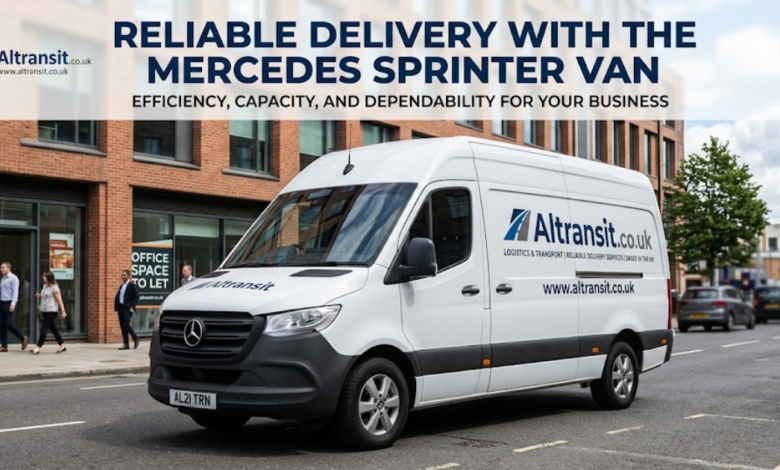
Mercedes Sprinter Van: Models, Specs and Uses
The Mercedes Sprinter Van has become a familiar choice for American businesses, passenger transport operators, contractors, delivery companies, and camper builders. Its biggest advantage is flexibility. Buyers can choose configurations designed to move cargo, transport people, support specialty equipment, or serve as the foundation for a custom body. That flexibility also means there is no single Sprinter specification that works for every buyer.
Choosing the right Sprinter therefore requires more than comparing price tags. Wheelbase, roof height, payload, seating, drivetrain, towing needs, and planned equipment can all affect the final configuration. A delivery company may need maximum usable cargo space, while a contractor may care more about payload and shelving. Understanding those differences before ordering can prevent an expensive mismatch later.
Mercedes Sprinter Van Models and Configurations
Mercedes-Benz currently markets several Sprinter configurations in the United States, including Cargo Van, Crew Van, Passenger Van, Passenger Van Select, and Cab Chassis models. Each serves a different purpose. Cargo versions prioritize load space, Crew models combine seating and storage, Passenger models focus on carrying people, and the Cab Chassis provides a platform for specialized commercial bodies and equipment.
The right model depends mainly on what the vehicle will carry every day. A plumbing company may prefer an enclosed Cargo Van with shelving, while a construction crew may need passenger seating plus room for equipment. Shuttle operators have different priorities again. Mercedes lists a five-seat Crew Van and passenger configurations designed for larger groups, showing how significantly seating and usable cargo space can change between versions.
| Sprinter Type | Typical Purpose | Seating | Example Capacity |
|---|---|---|---|
| Cargo Van | Deliveries, tools, mobile service | 2–3 | 319 cu. ft. cargo volume on a current 144-inch configuration |
| Crew Van | Workers plus equipment | 5 | 240 cu. ft. cargo volume on the listed configuration |
| Passenger Van | Shuttle and group transportation | 12 on listed configuration | 82 cu. ft. cargo volume |
| Cab Chassis | Box bodies and specialized upfits | 2–3 | Up to 7,418 lbs payload on the listed current configuration |
Current configuration figures are based on Mercedes-Benz USA specifications and vary by wheelbase, body, GVWR, equipment, and drivetrain.
Size, Capacity, and Powertrain Options
One reason the Mercedes Sprinter Van works for so many applications is the range of available body and drivetrain combinations. Current U.S. Sprinter offerings use four-cylinder diesel powertrains, with standard-output and high-output choices appearing across configurations. AWD is also available on selected builds. Buyers should verify the exact model they are considering because engine, drivetrain, wheelbase, GVWR, payload, and towing ratings are interconnected.
Capacity numbers deserve particular attention. For example, Mercedes currently lists a 144-inch Cargo Van configuration with 319 cubic feet of cargo volume, a 4,211-pound payload rating, and a 5,000-pound maximum towing figure. The Cab Chassis page lists up to 7,418 pounds of payload and 7,500 pounds of towing for its specified configuration. Those figures should never be assumed to apply to every Sprinter.
Before comparing vans, check:
- Wheelbase
- Overall vehicle length
- Roof height
- Interior standing height
- Cargo volume
- Payload capacity
- GVWR
- Towing rating
- Seating capacity
- Rear-wheel drive or AWD
- Space and weight required for an upfit
Best Uses for Business and Personal Needs

The Sprinter is especially useful when a standard passenger vehicle or smaller commercial van cannot provide enough interior volume or customization potential. Delivery businesses can create organized cargo areas, while electricians, HVAC technicians, plumbers, and telecommunications crews can install shelving, bins, workstations, partitions, and specialty equipment. Passenger versions can serve hotels, tour operators, organizations, and transportation companies that regularly move groups.
Recreational buyers also use Sprinter platforms for camper conversions, although a conversion should be planned around weight rather than appearance alone. Cabinets, water tanks, batteries, beds, climate systems, appliances, and passengers all consume payload. Commercial buyers face the same issue with tools and equipment. A visually spacious van can still become overloaded if the finished build exceeds its legal weight limits.
| Use Case | Configuration to Consider | Main Priority |
| Parcel delivery | Cargo Van | Cargo volume and access |
| Plumbing/HVAC | Cargo Van | Payload and interior upfit |
| Construction crew | Crew Van | Seating plus tool storage |
| Hotel shuttle | Passenger Van | Passenger capacity |
| Mobile workshop | Cargo Van | Roof height and electrical upfit |
| Camper conversion | Cargo Van | Space, payload and wheelbase |
| Specialty box body | Cab Chassis | Payload and body compatibility |
Common Sprinter applications include:
- Last-mile delivery
- Electrical and plumbing services
- HVAC operations
- Mobile repair businesses
- Passenger shuttles
- Hotel transportation
- Equipment transport
- Mobile offices
- Recreational conversions
- Fleet operations
How to Choose the Right Sprinter
Buying the largest Mercedes Sprinter Van available is not automatically the smartest decision. Extra length and height can provide valuable space, but they may also make parking, maneuvering, storage, and route access more difficult. Start with the vehicle’s actual job. Determine what must fit inside, how many people will ride in it, where it will operate, and whether it will regularly carry or tow heavy equipment.
Payload should be calculated before an upfit is ordered. Shelving, partitions, flooring, generators, batteries, tanks, tools, inventory, passengers, and accessories all add weight. AWD can also be valuable for businesses operating in snow, loose surfaces, or difficult job sites, but it should solve a real operating problem rather than become an expensive option purchased simply because it is available.
Use this buying process:
- Define the van’s primary daily job.
- Estimate average and maximum cargo weight.
- Determine required passenger capacity.
- Choose an appropriate wheelbase.
- Decide whether standard or high roof space is necessary.
- Calculate the expected weight of the finished upfit.
- Determine whether AWD is justified.
- Confirm payload, GVWR, and towing limits on the exact build.
- Compare service access and operating costs.
- Test-drive the configuration before placing a final order.
Ownership Costs, Maintenance, and Upfitting
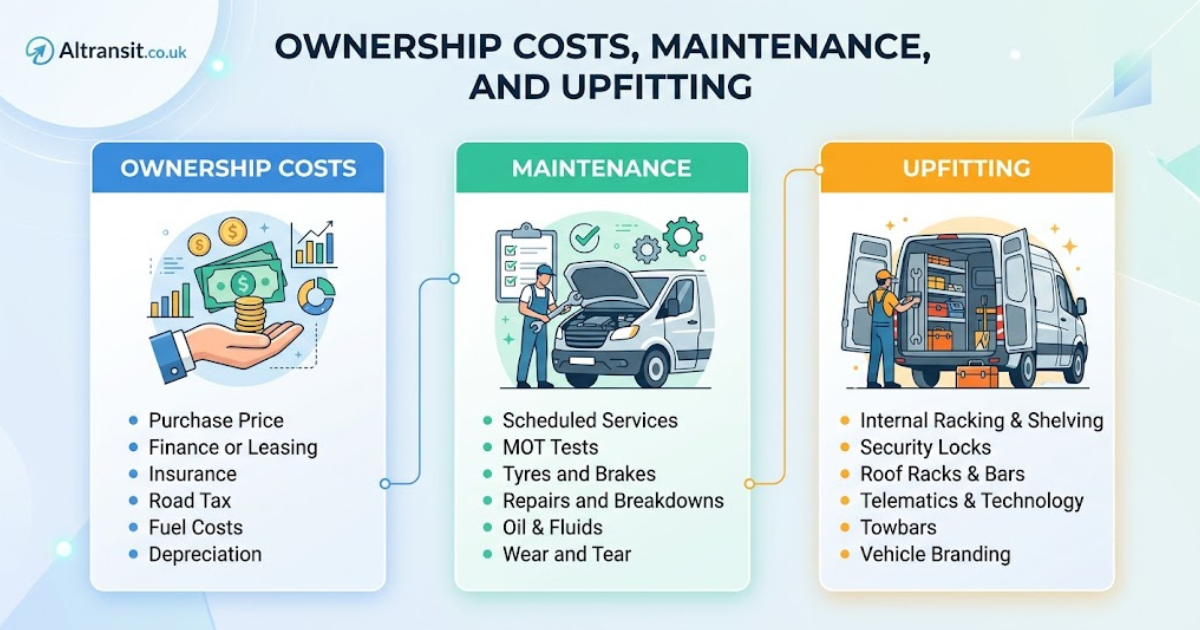
Purchase price is only one part of Sprinter ownership. Businesses should calculate total operating cost, including financing, insurance, fuel, scheduled maintenance, tires, repairs, vehicle downtime, and modifications. A cheaper configuration can become more expensive if it cannot perform the job efficiently. Likewise, paying for capacity or equipment that will rarely be used can reduce the financial return from the vehicle.
Upfitting should also be treated as part of the original vehicle specification rather than an afterthought. Mercedes provides technical information for upfitters, and commercial buyers should work with experienced installers when adding bodies, shelving, electrical systems, refrigeration, lifts, or heavy equipment. Weight distribution, electrical loads, fastening points, safety systems, and manufacturer requirements can affect whether an installation is practical and compliant.
Commercial Buyer Checklist
-
Confirm the exact payload rating of the selected configuration.
-
Calculate passengers, tools, cargo, and upfit weight.
-
Verify towing requirements before ordering.
-
Check roof and door clearance at regular destinations.
-
Confirm local Mercedes commercial service availability.
-
Get a written upfit weight estimate.
-
Compare financing and insurance costs.
-
Consider expected annual mileage.
-
Plan for maintenance-related downtime.
-
Review the final build sheet before purchase.
Conclusion
The Mercedes Sprinter Van is most valuable when its configuration is matched carefully to the job. Cargo space alone should not determine the purchase. Payload, wheelbase, roof height, seating, drivetrain, towing requirements, upfit weight, and operating environment matter just as much. Businesses that calculate these factors before buying are more likely to choose a van that remains practical as their workload and equipment needs change.
For U.S. buyers, the best approach is to narrow the lineup according to real operating requirements and then verify specifications for the exact vehicle. Current Mercedes-Benz data shows meaningful differences among Cargo, Crew, Passenger, and Cab Chassis versions. Compare those numbers with your expected workload, test the vehicle when possible, and avoid paying for capacity or features your operation does not actually need.
Frequently Asked Questions
Is a Mercedes Sprinter Van good for business use?
Yes, it can be a strong business platform when the configuration matches the work. Cargo models suit deliveries and service trades, Crew Vans combine worker seating with storage, and Cab Chassis models support specialized bodies. The important question is not whether a Sprinter is generally good, but whether its payload, dimensions, drivetrain, service requirements, and purchase cost fit your operation.
How many passengers can a Mercedes Sprinter Van carry?
Passenger capacity varies by model and configuration. Mercedes currently lists a 12-seat specification on its Passenger Van page, while its Crew Van configuration seats five. Passenger Van Select configurations can also differ according to wheelbase and seating layout. Always confirm the seating capacity on the exact vehicle build rather than assuming every Sprinter Passenger Van has the same arrangement.
Is AWD available on the Mercedes Sprinter?
Yes. Mercedes currently offers AWD on selected high-output diesel Sprinter configurations in the U.S. market. AWD may be useful for operators dealing with snow, unpaved job sites, loose surfaces, or other low-traction conditions. It is not automatically necessary for every buyer, however. Compare the added cost and configuration implications against where and how the van will actually operate.
Can a Sprinter Van be converted into a camper?
Yes. Cargo versions are frequently considered for camper-style conversions because their interior space can accommodate beds, cabinets, electrical systems, water storage, and other equipment. The critical issue is finished weight. Every component consumes payload. Buyers should estimate the weight of the complete conversion, occupants, water, luggage, and supplies before selecting the base van rather than designing the interior first.
What should I check before buying a Sprinter Van?
Start with the exact model, wheelbase, roof, drivetrain, GVWR, payload, towing rating, and seating capacity. Then calculate the weight of any equipment or conversion planned for the vehicle. Check service access in your area and estimate total operating costs rather than looking only at MSRP. For commercial builds, confirm that the selected configuration is compatible with the intended upfit before purchasing.